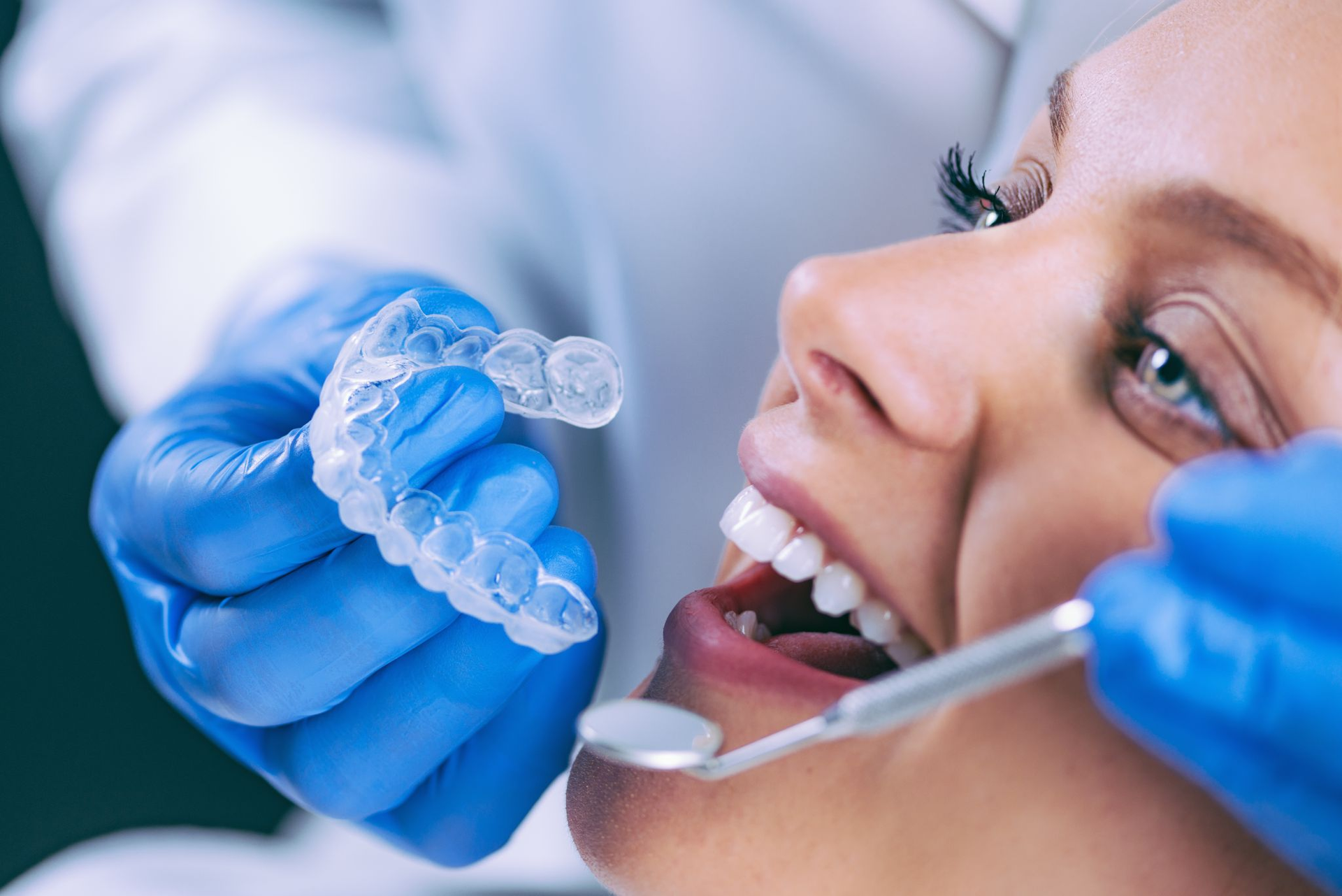
Invisalign uses a series of clear trays to move teeth gradually. You take the trays out when you eat or clean your teeth, then put them back in. That sounds simple enough, and for many adults, it is. The part that takes some discipline is wearing the trays for the recommended number of hours each day.
Treatment time and cost aren't the same for everyone. They depend on how much the teeth need to move, the type of correction needed, and the treatment plan created after an examination.
How does Invisalign work?
Invisalign works through a series of custom-made clear aligners. Each tray is made to move the teeth a small amount. After wearing one set for the prescribed period, you move on to the next set.
Treatment starts with an examination of the teeth and bite. Digital scans may be used to create a detailed picture of the current tooth positions, and help plan the movements needed during treatment.
The aligners fit over the teeth and apply gentle pressure to specific areas. You won't notice the teeth moving day by day. The changes happen gradually as you progress through the aligners.
Most treatment plans call for wearing the trays for around 20 to 22 hours a day. They're removed for meals, brushing, flossing, and drinks other than water.
Then they're put back in.
That routine becomes part of the day. The trays go in after breakfast, come out at lunch, and come out again when it's time to brush. It isn't complicated, but forgetting to put them back in can become a problem if it happens often.
The treatment only works when the aligners are being worn as directed.
How much does Invisalign cost in Carlstadt, NJ?
The cost of Invisalign in Carlstadt, NJ generally falls around $3,000 to $8,500; it varies from patient to patient. A person with a small amount of crowding may need a very different treatment plan from someone who needs more extensive tooth movement.
The number of aligners can affect the cost, as can the expected length of treatment and the type of correction required. If other dental treatment is needed before orthodontic treatment starts, that can affect the overall amount you'll spend as well.
Insurance is another factor. Some dental plans provide orthodontic benefits, although coverage varies by plan.
This is why a general price found online doesn't tell you what your treatment will actually cost.
- During a consultation, ask for the details.
- How long is the treatment expected to take?
- How many aligners may be needed?
- What does the quoted price cover?
- Are retainers included afterward?
Those questions are more useful than comparing two advertised prices that may cover completely different treatment plans.
Is Invisalign a good option for adults?
Invisalign for adults can be a good option for people, who want to correct certain tooth alignment problems without wearing fixed metal braces. The trays are clear and can be removed when needed.
Clear aligners may be used for some cases involving crowded teeth, gaps, or bite concerns. Adults who wore braces when they were younger may also be candidates if the teeth have shifted over the years.
But clear aligners aren't suitable for every orthodontic problem.
Some tooth movements are harder to manage with removable trays and may be better treated with traditional braces or another approach. A dentist needs to examine the teeth and bite before recommending treatment.
There's also the question of daily habits.
If you know you'll forget to put the trays back in after lunch, or you'll leave them out during a long dinner and forget about them afterward, that matters. The trays need consistent wear. That's part of the treatment, not a minor detail.
For adults who can keep up with the recommended schedule, clear aligners can fit into a normal day without changing everything around orthodontic treatment.
What is the difference between Invisalign and traditional braces?
The main difference is how the appliances are worn. Invisalign uses removable clear aligners. Traditional braces use brackets, and wires that remain attached to the teeth during treatment.
With clear aligners, you remove the trays before eating and put them back after cleaning your teeth. With traditional braces, the brackets stay in place, so brushing around them takes more care.
Appearance is another obvious difference. Clear aligners are designed to be much less noticeable than metal braces.
Traditional braces can also be useful for certain types of tooth movement. Clear aligners can handle many common alignment concerns, but they're not the answer for every case.
So the decision shouldn't be based only on which option looks better.
The dental problem comes first. If one treatment can control the needed tooth movement better than another, that matters more than whether the appliance is clear.
How long does Invisalign treatment take for adults?
Treatment time depends on the amount of tooth movement needed. A relatively small alignment problem may take less time than a case involving significant crowding, or a more complicated bite.
Some treatment plans take around 12 to 18 months, but there's no standard timeline that applies to every adult.
Your wear habits can affect the schedule, too. If the aligners are supposed to be worn for 20 to 22 hours a day, but are regularly left out for much longer, the teeth may not move according to the original plan.
Follow-up appointments give the dentist a chance to check the progress and see whether the teeth are moving as expected.
If something isn't going as planned, it can be addressed during treatment. That's much better than reaching the end of the planned series and discovering that the teeth haven't moved as expected.
Can you eat normally during Invisalign treatment?
Yes. You can generally eat the foods you normally enjoy because the aligners are removed before meals.
This is one area where clear aligners are fairly convenient. There aren't brackets sitting on the teeth while you're eating, so you don't have the same food concerns that can come with traditional braces.
After eating, clean your teeth when possible before putting the trays back in. Food and plaque trapped against the teeth underneath an aligner aren't a great combination.
Water is generally the easiest drink to have while wearing the trays. For other drinks, remove the aligners first.
It's a small routine, but you'll repeat it every day during treatment. Getting used to it early makes the process less of a hassle.
Are Invisalign aligners comfortable?
You may feel pressure or mild tenderness when you start wearing a new set of aligners. That's expected because the trays are applying pressure to move the teeth.
For Invisalign for adults, a new tray can feel snug during the first few days. Some people also notice that speaking feels slightly different at first, but this usually settles as you get used to wearing the aligners.
Significant or persistent pain is different. If a tray is rubbing against your gums, feels sharp or doesn't fit properly, contact your dental office. You shouldn't assume that severe discomfort is simply something you have to put up with.
Do adults need retainers after Invisalign?
Usually, yes. Retainers are used after active orthodontic treatment to help keep the teeth in their new positions.
Teeth can shift over time. Finishing the final aligner doesn't mean the teeth will stay exactly where they are without further care.
At Smiles by Rizzo, our dentist will recommend a retainer and explain when to wear it. The schedule can change over time, so follow the instructions given for your particular case. For more details contact us at (201) 939-5770
This part gets less attention than the aligners themselves, but it matters. You don't want to spend months straightening your teeth and then ignore the maintenance afterward.
Regular dental care continues, too. Straight teeth still need healthy gums, good brushing, and flossing.
Frequently Asked Questions
Can adults get Invisalign if they had braces before?
Yes. Adults who had braces in the past may still be candidates for clear aligners if their teeth have shifted. A dentist can examine the current tooth positions and bite to determine whether aligners can make the needed corrections.
How many hours a day should Invisalign be worn?
Most treatment plans recommend wearing the aligners for about 20 to 22 hours each day. They're generally removed for eating, brushing, flossing, and drinks other than water. Consistent wear helps keep treatment moving according to the planned schedule.
Can Invisalign fix crowded teeth?
Clear aligners can correct some types of tooth crowding. Whether they're appropriate depends on the amount of crowding and whether other tooth or bite problems are involved. An examination is needed before deciding which orthodontic treatment is suitable.
Is Invisalign less noticeable than traditional braces?
Yes. Clear aligners are made from transparent material and don't use the metal brackets and wires associated with traditional braces. They're still visible at close range, but they're generally much less noticeable during everyday conversations.
Can Invisalign be removed for special occasions?
Yes. The trays can be removed for a short period when needed. They should be put back in afterward so you can maintain the recommended daily wear time. Taking them out for long periods on a regular basis can interfere with treatment progress.
What happens after Invisalign treatment?
Retainers are generally used after active treatment to help maintain the new tooth positions. Your dentist will recommend how and when to wear the retainer. Regular brushing, flossing, and dental checkups are still needed after orthodontic treatment.
Is Invisalign worth considering for adults?
Invisalign for adults provides a removable way to correct certain tooth alignment problems without having brackets and wires attached to the teeth. For someone who can maintain the recommended wear schedule, the day-to-day routine can be fairly manageable.
Recent Blog