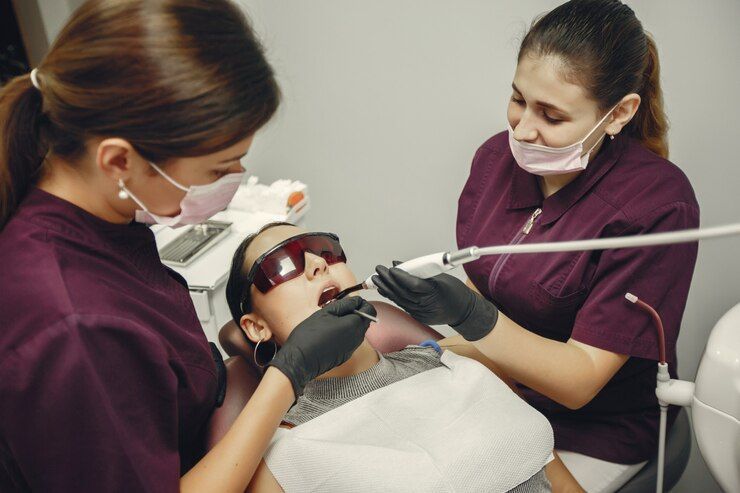
Dental emergencies usually need prompt dental care when there is severe pain, swelling, bleeding, a broken tooth, or a dental injury. Dental emergency treatment can be as simple as repairing a damaged filling, but some cases require a root canal or crown. The right treatment depends on what is happening inside and around the tooth.
A tooth can hurt for several reasons. A deep cavity, cracked tooth, infected pulp, or dental abscess can all cause pain, but they don't all need the same treatment. That's why trying to decide between a filling, root canal, or crown based on pain alone can be misleading. An examination gives the dentist a much better picture of what's going on.
What qualifies as a dental emergency treatment?
Quick dental care can help prevent the dental problem from becoming more serious and may help save the affected tooth.
A few common examples are:
- A permanent tooth has been knocked out
- A tooth is badly cracked or broken
- Pain is severe or keeps coming back
- The face or gums are noticeably swollen
- There is a suspected dental abscess
- A tooth hurts sharply when you bite
- Bleeding continues after a dental injury
- A filling or other restoration breaks and leaves the tooth exposed
A knocked-out permanent tooth is a particularly urgent situation. Pick it up by the crown, not the root, and keep it moist while heading to a dentist. If it can be placed back into the socket without force, that may be possible. If not, milk can be used to keep it moist until dental care is reached.
Don't wait for a dental appointment if swelling is making it difficult to breathe or swallow. Severe swelling that moves toward the neck can also require emergency medical attention.
Pain isn't always a good measure of how serious a dental problem is. A tooth can have significant damage before symptoms become severe. On the other hand, a small area of irritation can sometimes hurt a lot. That's one reason an examination matters.
How do I know if I need a root canal?
A root canal may be needed when the pulp inside a tooth becomes inflamed or infected. Strong tooth pain, lingering sensitivity to hot or cold, pain when biting, swelling, or an abscess can point to a problem with the pulp.
Some signs are more telling than others. If cold sensitivity disappears almost immediately after the cold food or drink is gone, the cause may be different from pain that continues for quite a while afterward.
Possible signs of pulp damage include:
- Pain that is severe or doesn't settle down
- Pain when chewing or biting
- Hot or cold sensitivity that lingers
- Swelling around the tooth
- A pimple or drainage on the gums
- Deep decay
- A cracked or fractured tooth
- A tooth that becomes darker after an injury
During a root canal, the dentist removes the damaged pulp from inside the tooth. The space is cleaned and disinfected, then filled and sealed. The tooth is still there. That's the point. Root canal treatment is used to treat the inside of the tooth while preserving the natural tooth whenever possible.
A toothache doesn't automatically mean a root canal is necessary. Cavities, worn enamel, exposed roots, loose fillings, and other problems can cause tooth pain too. The only way to know which problem is responsible is to have the tooth examined.
Are root canals painful?
Root canals are performed under local anesthesia, so most patients should not feel significant pain during the procedure. The tooth is numbed before treatment starts. Some soreness afterward is possible, particularly when biting down, but it usually settles as the area heals.
A lot of the fear around root canals comes from the toothache that brought the patient to the dentist in the first place. An inflamed or infected pulp can be extremely uncomfortable. Treating the source of that pain is one reason a root canal may be recommended.
During the procedure, the dentist accesses the inside of the tooth and removes the affected pulp. The canals are cleaned, disinfected, filled, and sealed.
Afterward, the tooth may feel different for a few days. Mild tenderness isn't unusual. Severe pain or increasing swelling is another matter and should be reported to the dentist.
There's also a practical reason not to put off a recommended root canal just because the pain has eased. Pain can change. That doesn't necessarily mean the problem has gone away.
When do I need a dental crown?
A dental crown may be needed when a tooth has lost enough structure that a filling can't provide the support or coverage it needs. This can happen after extensive decay, a major fracture, a large filling, or certain root canal treatments.
The amount of tooth left matters a lot.
A crown may be considered when:
- A large portion of the tooth has broken
- Decay has weakened much of the tooth
- A large filling has left little natural tooth structure
- A root canal has left the tooth needing added protection
- An older crown is damaged or no longer fits properly
Back teeth often need more protection because they take heavy chewing forces. A molar that's already weakened can be more vulnerable to another fracture. That's one reason crowns are commonly used for heavily damaged back teeth.
A crown isn't automatically required after every root canal, though. Some front teeth can be restored without a crown when enough healthy tooth structure remains. The dentist looks at the tooth itself before deciding.
And a crown isn't the same thing as a cap that simply hides a cosmetic problem. It has a restorative purpose. It covers the prepared tooth and helps protect the structure that's left.
What is the difference between a dental crown and a filling?
A filling repairs a smaller area of damaged tooth structure, while a crown covers much more of the visible tooth when the tooth needs greater protection. The dentist chooses between them based on the amount of healthy tooth remaining and the condition of the tooth.
A filling is commonly used after decay is removed. The dentist fills the resulting space with a restorative material and shapes the tooth so it can work normally again.
A crown involves more preparation because it fits over the tooth. It may be recommended when there isn't enough strong tooth structure left for a filling to do the job safely.
| Dental filling | Dental crown |
|---|---|
| Repairs a smaller damaged area | Covers most of the visible tooth |
| Often used for cavities | Often used for badly weakened teeth |
| Preserves more natural tooth structure | Requires preparation of the tooth |
| Works when the remaining tooth is strong enough | Used when broader protection is needed |
Here's where the distinction matters. A filling isn't simply a smaller crown, and a crown isn't just a larger filling. They serve different purposes.
A tooth can also move from one treatment category to another as damage progresses. A cavity that starts small may be repaired with a filling. If decay reaches the pulp, the tooth may need a root canal. If too much structure has been lost, a crown may then be needed to protect it.
Can I get same-day emergency dental care in Carlstadt?
Same-day emergency dental care may be available in Carlstadt, depending on the office's schedule and the type of problem. At Smiles by Rizzo, we provide same-day scheduling, last-minute appointments, walk-in emergency appointments, and next-day scheduling for urgent dental concerns.
If you're dealing with a severe toothache, broken tooth, or possible dental infection, call the office at (201) 939-5770 and explain what's happening. The dental team can tell you what appointment options are available.
One thing is easy to misunderstand here. Getting a same-day appointment doesn't always mean the entire problem will be finished that day. The dentist may need to examine the tooth and take X-rays first. A temporary repair or other immediate treatment may be done while a more involved procedure is scheduled.
When seeking dental emergency treatment, mention when the pain started, whether it comes and goes, what makes it worse, and whether there is swelling or sensitivity. Those small details can help the dental office understand what you're dealing with before you arrive.
Frequently Asked Questions
Can a toothache go away without dental emergency treatment?
Yes, tooth pain can disappear temporarily without the underlying problem being resolved. Pain may come and go with decay, inflammation, or infection. If the pain returns, lasts longer, or comes with swelling, sensitivity, fever, or pain when biting, it's worth having the tooth checked rather than assuming the problem has cleared up.
How quickly should I see a dentist for a broken tooth?
A broken tooth should be examined promptly, especially if it hurts, bleeds, feels sharp, or has exposed inner tooth structure. The sooner the tooth is checked, the sooner the dentist can determine whether a filling or bonding is enough or whether a crown or root canal is needed.
Does every root canal require a crown?
No. A crown isn't automatically needed after every root canal. The decision depends on how much healthy tooth remains, where the tooth is located, and how much pressure it receives during chewing. Back teeth often need additional protection, while some front teeth may be restored without full coverage.
How long does root canal treatment take?
Root canal treatment can often be completed in one or two appointments, but the time varies from one tooth to another. A complicated tooth may require more care. Once the root canal is finished, the tooth still needs a permanent restoration, which may be a crown or another suitable option.
Can a filling fix a cracked tooth?
Sometimes, but it depends on the crack. A small area of damage may be repaired with a filling or bonding, while a deeper crack may need a crown or other treatment. If the crack has affected the pulp, root canal treatment may also be necessary. A dentist needs to examine the tooth before choosing the repair.
What should I do while waiting for emergency dental care?
Keep the area clean and avoid chewing with the damaged tooth. If a permanent tooth has been knocked out, hold it by the crown and keep it moist while seeking dental care immediately. Don't put aspirin directly on the tooth or gums because it can irritate the tissue.
Recent Blog